Lancaster summers push cooling systems hard, and the failure almost always announces itself the same way: the temperature gauge climbs, steam finds the edge of the hood, and a driver has about a minute to make good decisions. This guide splits the job into the part you handle on the shoulder and the part that belongs in a shop, because overheating is one repair where the do-it-yourself line is very clear.
You can safely do the stopping, the waiting, and the observing. You should not open, refill, or test a hot cooling system. Everything below follows that split.
Your part: the roadside sequence
- Act on the first sign. Gauge climbing past its usual spot, a temperature light, steam, or a sudden loss of cabin heat on a cold day all count. Turn off the air conditioning and turn the heater to full hot to shed engine heat.
- Stop somewhere fully safe. Off the pavement, on level ground if possible, parking brake set. A parking lot a quarter mile back was the right answer. The next exit is not, if the gauge is already in the red.
- Shut the engine off and leave the hood closed for now. Opening the hood is fine once the engine is off, to let heat escape, but keep hands and face away from the cap, hoses, and any steam path.
- Wait for a full cool-down. At least an hour in summer heat before anyone touches the cap. Use the time to arrange a tow rather than a restart experiment.
- Observe and record. Note where the gauge sat, whether the reservoir looked empty or overfull, any puddle and its color, and whether the fans were running. That report speeds up diagnosis more than you would expect.
- Call for a tow. Driving home slowly is the gamble that turns a hose into a head gasket. The tow is the repair decision, not a failure of one.
The one rule with no exceptions
Never open a hot radiator cap or pressurized reservoir cap. Coolant in a hot engine is above its normal boiling point and held liquid only by pressure. Twist that cap and the pressure drops instantly, the coolant flashes to steam, and it comes out at you. The burns from this are the most common serious injury in home car repair. Fully cool means the upper hose can be squeezed comfortably and the engine feels cool to the touch nearby. Anything less means wait, or let the shop handle it cold on their schedule.
For the same reason, never add cold water to a hot engine, never bypass a failed fan with the hood propped open, and never keep driving with the heater trick as a long-term plan. Those are stories from an era of cast-iron engines and cheap parts. Your engine is neither.
The shop part: finding where the coolant went
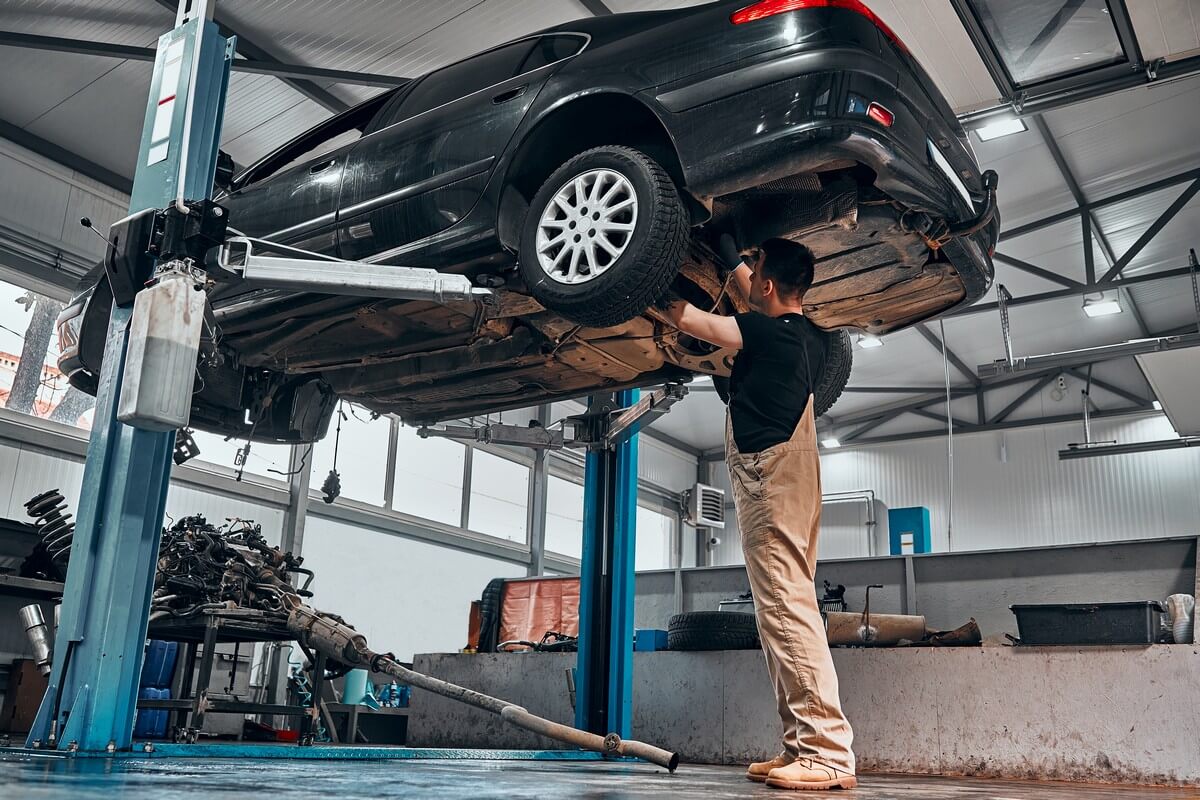
Coolant does not evaporate from a sealed system. When a car arrives at Porter Car Care LLC in Lancaster after an overheat, the diagnostic order is consistent: pressure-test the system cold and watch for the leak, inspect hoses, radiator, water pump, and thermostat housing, test the thermostat and fan operation, and check the oil and coolant for cross-contamination that would signal head gasket damage from the heat.
Overheating only at idle usually points to airflow, most often a fan or debris blocking the radiator. Lancaster and the surrounding counties add a local twist: spring pollen and fall seed fluff mat into radiator and condenser fins and quietly cut airflow for months. Overheating under load or at speed points more toward circulation, such as a sticking thermostat, a weak pump, or a restricted radiator. Telling the shop which pattern you saw cuts diagnostic time in half.
Preventing the sequel
After any overheat repair, ask what caused it and what else the heat stressed. Belts and hoses that survived severe heat may be shortened in life. Keep the reservoir checked weekly for the first month. A level that keeps dropping means the story is not over, no matter how well the car feels.
On the calendar side, coolant ages and its protective additives wear out. Follow the maker interval for coolant replacement, inspect hoses every oil change, and rinse debris from the radiator gently each spring. The shoulder routine above is worth knowing. The calendar routine is what keeps you from needing it.
Common questions
Can I top off coolant and drive to the shop if it cooled down?
Only if the system is fully cool, the leak is plainly minor, and the distance is very short, and even then a tow is safer. If coolant vanished once, it will vanish again.
Why did my heater blow cold while the engine overheated?
Low coolant often stops circulation through the heater core first. Cold cabin air with a hot gauge is a classic sign the coolant level has dropped badly.
Will one overheat always warp the head?
No. A quick shutdown often prevents real damage. The risk climbs with temperature and time, which is why stopping immediately matters so much.
Photos in this guide are representative stock images.
← All guides from Porter Car Care LLC← Back to Porter Car Care LLC